Showing posts with label Tim Holtz. Show all posts

Monday, October 24, 2022

hallo(DEX)ween collaboration for StencilGirl®

It's an All Hallows' Eve Masquerade at Lost Souls Garden and the guests have traveled from near and far to join in the fun!  Follow along as I introduce you to everyone...  
For this collaboration project, we were each asked to create a Halloween themed piece using StencilGirl® stencils and a chipboard roloDEX tray and cards by UmWowStudio. We were to use any other supplies we wished for the theme, and to let our imaginations take us where they may. The pieces created by each artist are truly wonderful, each a unique representation of the artists' style. It is definitely worth a hop over to the StencilGirl® Blog to check them all out. You can click here to visit.

Now, onto the details for my All Hallows' Eve Masquerade Attendees inDEX.
I began by assembling the tray, using glue to secure the pieces in place. Once dry, I spray painted the base tray black. The exterior sides were covered in backdrop paper (by Tim Holtz). Next, I traced the Botanical Wildflowers stencil (L774) onto black paper and cut out the pieces by hand. These pieces were then glued onto the outside of the tray to create the "garden." An inked Idea-ology quote chip and resin skulls (for feet) were added to complete the base tray. 
With the base tray complete, it was time to begin creating the cards that would fill it up. I wanted to create a garden gate to welcome all of the guests. Using a retired Tim Holtz Sizzix die, I cut two Gothic Gates out of heavyweight paper and adhered them together leaving the bottommost edges separate. the two bottoms were then glued to either side of a painted spine that would slide onto the DEX rails. Tiny type uppercase die cut letters were used to form the words Lost Souls Garden, and Golden bronze irridescent paint highlights were added. 
To further create the setting, I added a spooky moon with bats and shadowed vines. Using a half circle tall card, I painted a base layer of Golden bronze iridescent, then stenciled the Linear Textures (L857) vines with black gesso. The bat confetti pieces were painted with gesso then glued onto the "moon".
The next piece we encounter is the Masquerade announcement, an altered Idea-ology baseboard frame. The highlight of the announcement being the reverse side, where I used the Botanical Wildflowers (L774) mask and lightly applied the Golden bronze iridescent paint around it, creating an ethereal appearance.
The line up of attendees begins with the Forsaken ones, Alice and Herman. Each of these lost souls were abandoned at an early age; neither have been able to find their soulmate. They have both donned their fineries in the hopes of finding someone special at the event. The halos for both of the Forsaken were created using the Beautiful Halo (S543) stencil, with modification. 
Henry, the Undertaker, wears his majestic wings. Having to spend all his days with the dead, he looks forward to meeting up with other souls at the Masquerade. Henry's halo features the Beautiful Halo (S543) stencil, he also has a special detail on his lapel using a stencil from ATC Mixup Missigman #2 (L793).
The Gypsy, Madam, has traveled the world, oftentimes being called a weaver witch. Madam is always on the lookout for unique fabrics and fibers with which to weave her wonderful textiles. She has been known to cast spells through her complex weavings. Faithful Halo (S545)  creates the perfect backdrop for this attendee, whose woven skirt was made using the DEX weaving frame.
The Apothecary has volunteered to utilize his formulation skills and serve libations at the Masquerade. Clyde fancies himself a concoction connoisseur. He has a modified Faithful Halo (S545) to highlight his dapper attire.   
The next attendee is Palm Reader, Rosalie. When she is not reading palms, she can most often be found reading tea leaves, her true passion. I modified the Beautiful Halo (S543) stencil to incorporate some Botanical Wildflower (L774) stencil parts reflecting her talents. Rosalie's dress has an overlaid pattern from ATC Mixup Missigman #1 (L792)
The last Masquerade attendee in the tray is the Fortune Teller. Everett has his secured his future by predicting others'. Growing up, his favorite pastime was creating stories for his peers of where their futures would lead. After learning that many of his predictions became reality, Everett accepted his extra sensory abilities and decided to make a living from them. Lost souls are his favorites to work with. Faithful Halo (S545)
The final piece in my project is another Idea-ology Baseboard frame featuring the poem Night. The reverse side has been treated with the same technique used on the announcement, highlighting the Botanical Wildflowers(L774) mask. 
I truly enjoyed creating each of these pieces, and look forward to adding more. Working with the roloDEX system is addictive and playtime with StencilGirl® stencils is never ending fun.
It is always a pleasure to be part of Tina Walker's StencilGirl® Collaborations, and this Halloween themed project was no exception. I hope you can stop by the StencilGirl® Blog to check out all the awesome projects that were created! 

Thanks you for visiting my blog today, I truly appreciate it.
~Ann

StencilGirl® stencils used:

Botanical Wildflowers (L774) by Rae Missigman

ATC Mixup Missigman #1 Art Marks (L792) by Rae Missigman

ATC Mixup Missigman #2 Botanical (L793) by Rae Missigman

Faithful Halo (S545) by Pam Carriker

Beautiful Halo (S543) by Pam Carriker

Linear Textures (L857) by Lucie Duclos

UmWowStudio roloDEX used:

half circle tallhalf tabbed, spines, standard cards, weaving frame, roloDEX tray


Tuesday, October 27, 2020

morbid manse


Hello everyone, today I am sharing my October project for the Gypsy Soul Laser Cuts blog. I could not let the month go by without a project befitting the spookiest of holidays. Imagine a foggy, moonless night in Old Salem. Adjacent to the rows of tombstones and monuments stands a historic manse. The door is ajar, why not take a peak... what's inside is absolutely morbid.
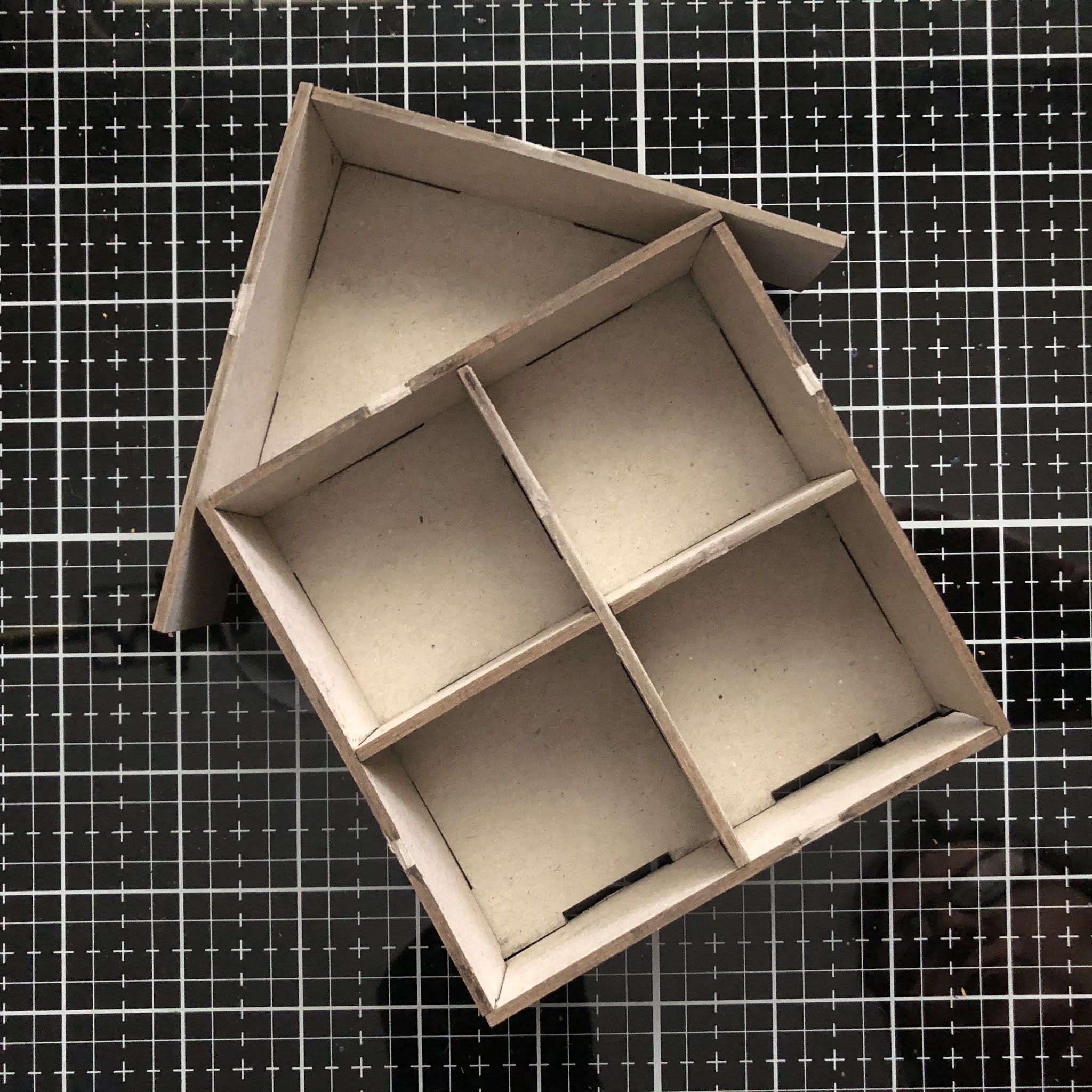
I begin with a Gypsy Soul Last Cuts mini house room box. Using an exacto knife, I cut apart wall, roof and divider pieces. As usual, I do a test fit to understand how all the pieces fit together. Then, using acrylic paint, I add paint along all the edges and at areas where pieces join together. This allows me a bit of play when I am cutting and attaching papers into the sections (if a paper cut is slightly off, the gap does not show). The "attic" area is covered completely with the paint. Since I want it too look like an unfinished attic space, I will not be covering any of these surfaces with paper.
When the paint is dry, I assemble the house. Applying a thin line of glue along the edges and tabs, I then secure the pieces in place. Sometimes it helps to clamp the pieces while drying. When the piece is assembled and the glue is dry, it is time to add the details. I begin with the outside of the house.
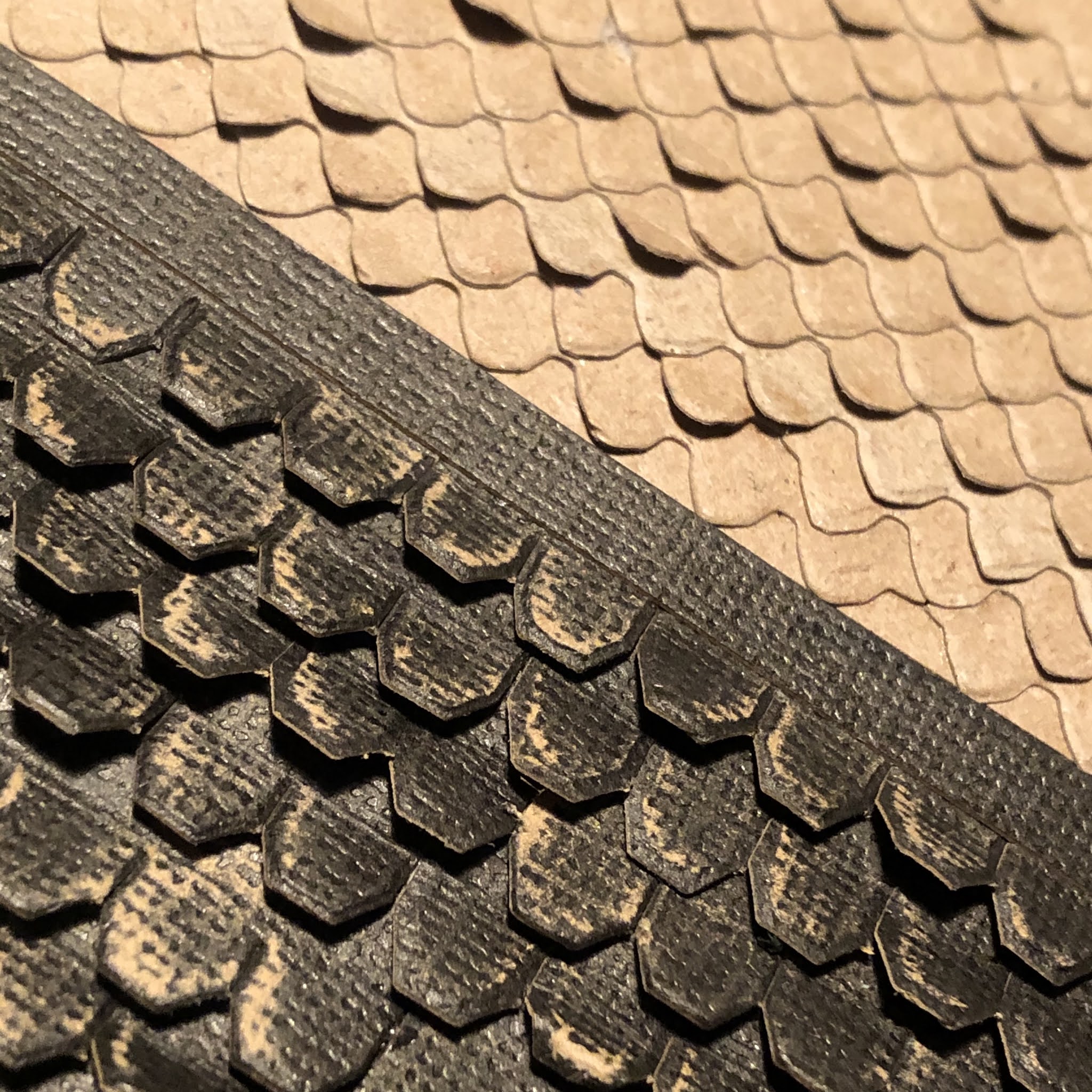
Using a die that cuts different styles of shingles and shakes, I select a style to use for the main exterior clapboards. I cut rows of siding from blackout kraft cardstock, then lightly sand and ink them to create an aged and weathered appearance. I begin adding the die cut pieces to the house, working from the bottom up so that the shingles can overlap and stagger mimicking traditional siding. Work on row at a time all the way around the three sides before moving onto the row above. 
I have always admired the special details that are found on historic houses. I thought it would be fun to add a section of fish scales in the upper gabled area. Before switching patterns, I add a frieze (trim) board across the rear to transition to the new pattern. When the fishscale shingles are all in place, I add trim boards along the angled edges to finish the look. The roof is completed in the same manor as the exterior walls, but using heavyweight kraft paper inked with distress ink.
Now it is time to finish the interior rooms. I select papers that give the look of historic wallpapers and plaster. Each "room" is finished in a different paper. Measure and cut a square for each rear wall. Then, cut a strip of matching paper that will cover both the side walls and the ceiling. When papers are cut for each room, ink all of the edges with a dark brown or black ink. 
To add an element of authenticity, create "cracks" by tearing into the paper and inking the torn area. You can also create the appearance of leaks within the walls by dripping dark ink down the wall sections.
The "wood" floors of each room are made by cutting pieces of woodgrain embossed paper that's been inked and and painted. All of the papers are attached to the surfaces using collage medium.
In keeping with the undertaker theme, I decide to give each room its own function that would be found in a funeral home. Starting with the attic, I adhere small pieces of hay randomly on the floor where a skeleton lies. The only remains of a long forgotten guest from years ago. 
Located on the second floor is a mourning room,  complete with prayer candles. An area to gather and contemplate lost souls. 
Adjacent is a store room for found objects; misplaced parts and pieces.
The selection room can be found on the first floor. Here you can find items for all your funeral needs- from flowers to urns and caskets. 
The undertaker's office completes the tour.
Two tiny eye hooks are screwed into the gable to secure a hanging sign. The undertaker is open for business, established 1876.
I hope you have enjoyed this haunting holiday make, perhaps you are inspired to create one of your own. If you've run out of time, consider making a house for a different holiday. I can imagine a wonderful Christmas inspired elf's workshop, or an easter egg factory. The possibilities are endless with the GSLC mini house room box.
Thanks so much for stopping by today, I truly appreciate it.
Enjoy these hallowed days.
Ann
xxx 
supplies used:

Gypsy Soul Laser Cuts used: mini house room box 

Distress products: collage medium, inks, paint, blackout kraftstock, 

Tim Holtz Sizzix Alterations: village rooftops Bigz die.halloween mixed media (bats), 3D embossing folder lumber

Ideaology & Ideaology halloween products: paper stash, resin pumpkins, skulls, cameo, mini vials, quote chips, clippings stickers, charlotte, ephemera, snippets, industrial trims (discontinued)

misc. halloween plastic skeleton pieces, stretchy skeleton, dried flowers, pine needles, twine, faux spider web, hot glue gun, hay 


Tuesday, September 22, 2020

specimen shattered


Next week I will begin decorating the house for Halloween. For me, this is the best part of the holiday. I have a china cabinet in the dining room which I convert into a creepy cabinet of curiosities.  I thought it would be fun to make a piece to add to my curiosities. Using the Gypsy Soul Laser Cuts 6x6 shadowbox as a base, I created the specimen box. Some shards of mica formed the perfect "shattered" enclosure.


As mentioned, I begin with a 6x6 shadowbox kit from GSLC. The eight piece kit arrives flat. It's a good idea to wipe down the edges of each of the sections before getting started, to remove any residue from the laser cutting process. Any soft rag or paper towel will do the trick. Once the edges have been wiped clean, I like to test assemble the piece (without any glue) to familiarize myself with how it all works. This also helps me to formulate a vision for my final piece. 


I coat all the edges of the pieces, as well as areas where dividers are located, with a light coat of dark brown paint. I plan on adding dimensional woodgrain embossed papers to the outside of the box so that it will look as if the box is made of wood. Having the edges painted a dark brown will ensure that the faux finish is more believable. I also like to coat the interior corners with a dark color so that when the decorative paper pieces are attached to the interior, any unintentional gaps do not show.

I set aside the box pieces to dry and begin working on the interior papers. I begin with a piece of scrapbook paper that has subtle markings and appears aged. I add ink and some random script stamping onto the paper to give it even more dimension, this paper will be used to cover the inside base of the box. A coordinating paper is cut into strips that equal the depth of the box. These strips are inked around the edges with the same ink that was used on the background paper. When the painted edges are completely dry, I use glue along tabs and edges and form the box.

I measure each of the box compartments and cut the base papers to fit, making sure to ink any cut edges. I label the backs of the papers with a letter designated for each compartment. Typically, the three smaller sections will all be the same size; however, the designation allows me to know which "specimen" stamp will be used in which compartment. Using a stamp platform and black archival ink, I stamp the selected "specimen" in the center of the cut paper. I also stamp each image onto a piece of clear acetate with black StazOn ink. The acetate images are set aside to dry.

The next step involves creating the faux wood box exterior. Using a 3D embossing folder and some damp mixed media paper, I run the paper through the diecut machine to add the embossed woodgrain texture. These pieces are then inked, painted and coated with various mediums resulting in a true "wood" look. I make sure to incorporate some of the paint color that was used on the base box to ensure that the transitions are seamless. The wood grained papers are cut to size and attached to the box sides and back with collage medium.

With the main images in place for each section, I am able to visualize where I want to add rub-ons  and additional stamped images. I want the compartment to appear as if the base papers were taken straight from journals or documentation related to each specimen. I add date stamps, signatures, numbers and various other markings. When I am satisfied with the look, the papers are secured in place with adhesive. 

When the StazOn ink is completely dry, I turn the stamped acetate pieces over and use alcohol ink to color the images. When dry, I cut out each image, being careful to get as close to the edge as possible without compromising the image. These acetate images are then attached above their respective stamps within the box. I only attach the acetate pieces along the thorax/abdomen. This allows the wings to be folded upward  enhancing the dimensional effect. 


 The final step in the process is adding shards of mica to the exterior edges of the box. I use a strong, clear drying glue along the edges where the mica touches and then add a weight on top while it dries. You can add as much or as little mica as you want to achieve the desired look. I love how the largest piece spans across the compartments, yet still leaves random areas uncovered.

I hope that you have been inspired by this piece to perhaps create your own themed piece, It is always a lot of fun making pieces that can be displayed year after year.

Thank you so much for taking the time to stop by today, I truly appreciate it.

~Ann  


supplies:

Acetate, Distress Archival black soot ink, Distress collage medium matte, Distress inks, Distress paints, Gypsy Soul Laser Cuts:  6x6 Shadowbox, Mica pieces, Mixed Media paper, StazOn black ink, Tim Holtz Ideaology: paper stash, specimen rub-ons, Tim Holtz/Sizzix 3D embossing folder lumber, Tim Holtz/Stampers Anonymous stamps 


Tuesday, June 23, 2020

all are welcome

Lately there seems to be unrest in so many aspects of life,
I felt the need to create a piece dedicated to unity.
This accordion book I am sharing on the GSLC blog is made with a few different pieces from Gypsy Soul Laser Cuts.
When I begin gathering pieces to create the accordion,
I envision many different types of neighborhoods and buildings.
I choose the house oddities box for its variety of building shapes that will become the "pages."
As my ideas for the finished piece become clearer, I decide on having the central panel unfold in the shape of a heart. The GSLC book of love mini album covers are perfect for this use.
I arrange all the pieces in a horizontal line to determine the final arrangement. Two of the accordion "pages" will comprised of multiple shapes overlaid and glued together.
The house oddities box contains a door panel, this becomes the cover of the accordion. I cut two pieces of scrap chipboard the exact same size as the door panel. One of these will become the back cover of the album, while the other will give reinforcement to the front door cover piece. I use inks and paints to color a piece of woodgrain cardstock creating the look of stained wood. When this is dry, I remove the inner panels from the GSLC door and the adhere the "wood" to the door panel with collage medium. I weight it down while drying to ensure that the panel remains flat.
Using an Exacto knife, I carefully cut out the open inner panel sections.
The raised panels of the door are created by adhering the remaining "wood" pieces to only the innermost rectangles from the door panel. When everything is put back into place, the panel "frames" painted with brown acrylic, appear to be recessed from the wood grained raised pieces.
 The back sides of all the pages will covered with patterned paper. Once I select a pattern appropriate for my theme, I trace all of the pages onto the paper, cut them out and label them. This makes it easier to distinguish which pieces go where during the final assembly.  Before adding any of the finishes, I paint the edges of all the interior pages with black paint, this creates a finished look when the accordion is complete.
Each of the building "pages" inside the accordion contain a different wall finish. I decide on wood siding, brick, stone, and stucco, then determine which building shape suits each finish best. 
To create the look of wood siding, I once again use woodgrain paper. Colored with various inks to highlight the woodgrain pattern, the paper is cut into strips which are attached to the house form in an overlapping pattern, mimicking siding.
The brick wall is created from a brick patterned die cut. Glue is added only to the back of the brick pieces of the die cut; when the die cut is placed upon the building shape, I rub lightly over the pattern allowing the bricks to adhere to the chipboard. The remaining paper is lifted off leaving the recessed mortar lines. These bricks are colored with inks and then coated with collage medium. The mortar lines are painted in with a fine paintbrush and acrylic paint.
The stone wall is created with texture paste through a stencil onto the chipboard building shape. When the texture paste has dried completely, the stones and mortar lines are painted in varying shades of gray to look like real stone.
The stucco finish building wall is created by covering the shape with grit paste.
When the paste is dry, acrylic paint is sponged on. Once the paint is dry, the surface is randomly inked with shades of brown ink to give the stucco a weathered and aged feel.
I work on the central heart panel next. Using a linen hinging tape, I secure the two covers from the book of love heart mini album together, aligning the pieces and allowing for the fold. I paint the front side of the heart with two layers of acrylic paint allowing to dry between coats. Knowing I want the heart to look like it has been graffitied, I use a font generator to select the desired style. I print the words "WE ARE ONE" and trace the outlines onto the painted heart. Then I paint in the letters and outline them. I ink the painted heart with black ink to created an aged look. Once complete, the heart is covered with one step crackle. This is set aside. A few hours later, I rub a dark glaze into the cracks and re-ink the edges.
Each of the pages contains various combinations of paper dolls, representing the many people in our world. I color the paper dolls with Copic markers, Distress crayons and ink. The paper dolls are attached to each page with collage medium and weighted down to dry.
The insides of the front and back covers are painted with brown acrylic paint.
A patterned paper of many different portraits is cut to fit each of the inside covers and attached with collage medium. This is then coated with one step crackle and when dry an antiquing glaze is rubbed into the cracks and allowed to dry.
With all of the page fronts complete, I attach the papers to the back sides of the pages and ink around the edges with black ink. Now it is time to assemble the accordion.
We are all tied together by a common thread, this is a loose and fragile connection. I decide to connect my pages with simple burlap string tied through eyelets. I align all the pages along the bottom and attach the eyelets. [Note: the eyelets would be easier to attach before adding the paper dolls.] When all the eyelets are in place, I tie the respective holes together creating the accordion.
Lastly, I add some small talk quote stickers to the interior pages to create a message:
replace fear of the unknown with curiosity
find joy
have hope
we are one
cultivate kindness
together is the best place to be
learn from yesterday, live for today, hope for tomorrow
I understand that there is always knowledge to be gained and room to grow to further our understanding of the world and people around us.
I believe that we are all one;
we all deserve the patience and understanding that is required to live in peace with one another.
If there were no differences among us, what an unfulfilled life we would live.
Thank you for stopping by the blog, I truly appreciate it.
 Wishing you peace in these trying times.
~Ann
  xxx


supplies used:
chipboard
Copic markers
DecoArt one step crackle
Distress collage medium: matte
Distress grit paste
Distress inks
Distress paints
Distress texture paste: opaque
Distress woodgrain cardstock
1/8" eyelets
Gypsy Soul Laser Cuts:
book of love heart mini albumhouse oddities box
May Arts burlap string: natural
Tim Holtz Ideaology: paper dolls, paper stash, small talk stickers
Tim Holtz Sizzix Alterations strip die: brick wall